Peaceful Christmas and Happy New Year 2026!

Peaceful Christmas and Happy New Year 2026!

Thank you for a great year and the excellent cooperation! We look forward to continuing our work together in 2026.

Enjoy the holiday season!

Optenni Lab version 6.2 is released now

Optenni Lab version 6.2 is released now

Posted by Jussi Rahola | 24 October 2025

As autumn sets in, it’s time for the release of the newest version of Optenni Lab.

Earlier this year, we gathered fresh ideas, listened closely to our customers, and aligned our development plans with our long-term strategy. After several focused steps in product development—and a few iterative pirouettes—Optenni Lab 6.2 is now ready for you.

To experience the new capabilities and enhancements firsthand, update your Optenni Lab version or register for a free trial.

Key new features in Optenni Lab 6.2: 

All editions

  • Plot selection templates
  • Multivariate parameter sweep
  • Phase shifter component

Professional edition

  • New optimization target: multiport impedance data (for data fitting)
  • System passivity as a new plot type
  • MDIF files generated with ADS can be used for multiport tuners
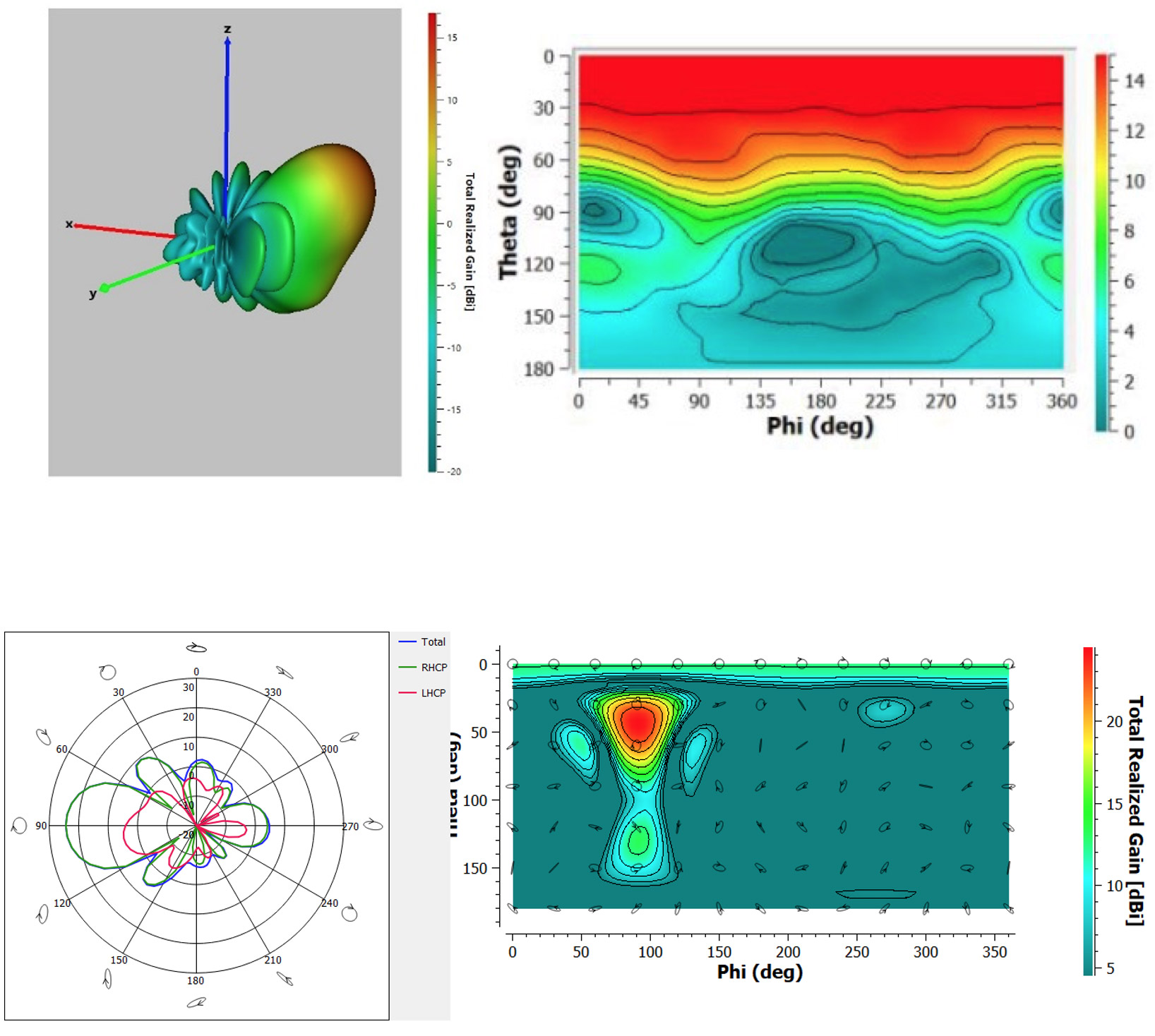
  • New plots for radiation pattern statistics

Array module

  • New optimization targets for radiation pattern statistics
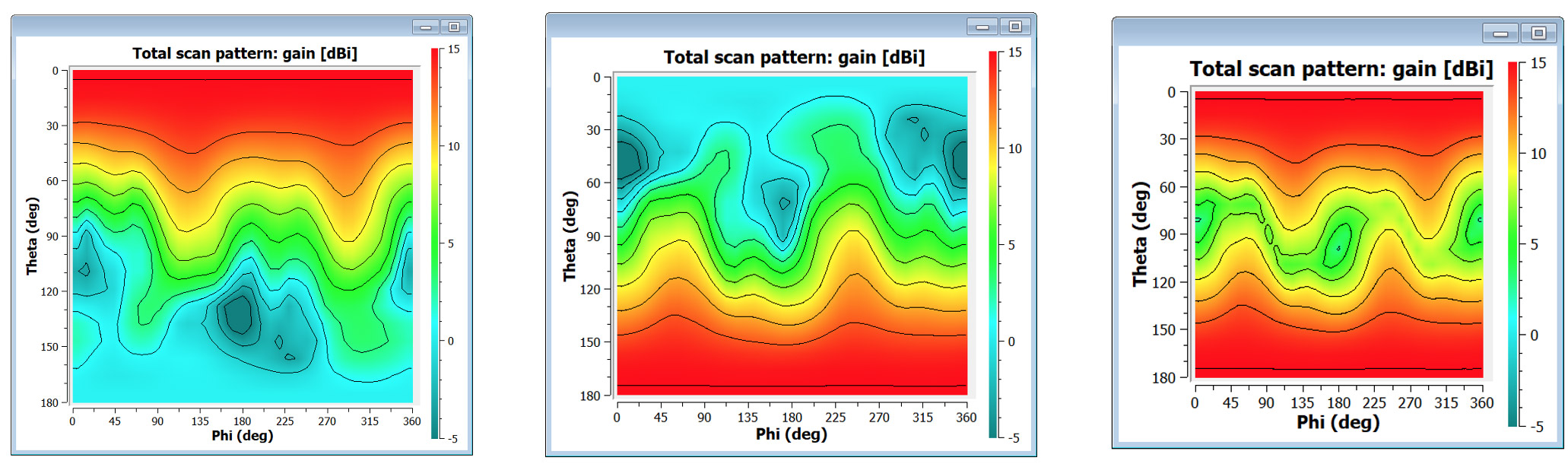
  • Total scan pattern can be calculated for a given field component
  • CDF (cumulative distribution function) of total scan pattern can be restricted to a custom angular region
Benefits of the new Optenni Lab 6.2 features:

Plot selection templates allow designers to reuse their preferred plots and settings across different circuit topologies. Numbering synthesis results—often a routine step—is now streamlined with automatic numbering. And parameter sweeps now support multiple parameters simultaneously. Together, these features help speed up result analysis in Optenni Lab.

Multiport impedance data, now available as a new optimization target in Professional Edition, is especially useful in data fitting applications—such as fitting an equivalent circuit model to measured or simulated data. Any non-passive behavior in system passivity plots—e.g., for switch models—may indicate the need to double-check the accuracy of de-embedding and component model measurements. Additionally, support for MDIF files generated with ADS expands integration options in the overall design process, especially when working with multiport tuners.

For Professional Edition, new radiation pattern statistics plot options make it easier to optimize antenna performance to meet application-specific requirements. Optenni Lab Array Module goes even further in this area, allowing users to set radiation pattern statistics as optimization targets, calculate total scan patterns for given field components, and to restrict CDF (cumulative distribution function) calculations to custom angular regions.

All these features, along with numerous other enhancements, are provided to our customers in version 6.2, enabling them to explore the theoretical limits, accelerate their design flow, and maximize the wireless performance of their products even better than before.

Parameter sweeps can be run for multiple variables simultaneously.

Ready for a free Optenni Lab trial?
Contact us for a product demo and further information on the latest Optenni Lab features


Meet us at International Symposium on Antennas and Propagation 2025 – Discover the Latest in Antenna and RF Design Innovation!

Meet us at International Symposium on Antennas and Propagation 2025 – Discover the Latest in Antenna and RF Design Innovation!

Posted by Jussi Rahola | 10 October 2025

Optenni will attend the 2025 International Symposium on Antennas and Propagation (ISAP 2025) in Fukuoka, Japan. During the conference exhibition from October 28 (Tuesday) to 30 (Thursday), please meet us at booth 25 on the 4th floor of the exhibition center ACROS Fukuoka.

Jussi Rahola, CEO of Optenni, will give a seminar presentation with the title: “Optimization techniques for enhancing antenna beam characteristics”. The seminar presentation will take place on Thursday October 30th, at 13:10-13:40, in ACROS Fukuoka B2 Event Hall, 2nd floor.

Symposium website:

We look forward to seeing you in Fukuoka!

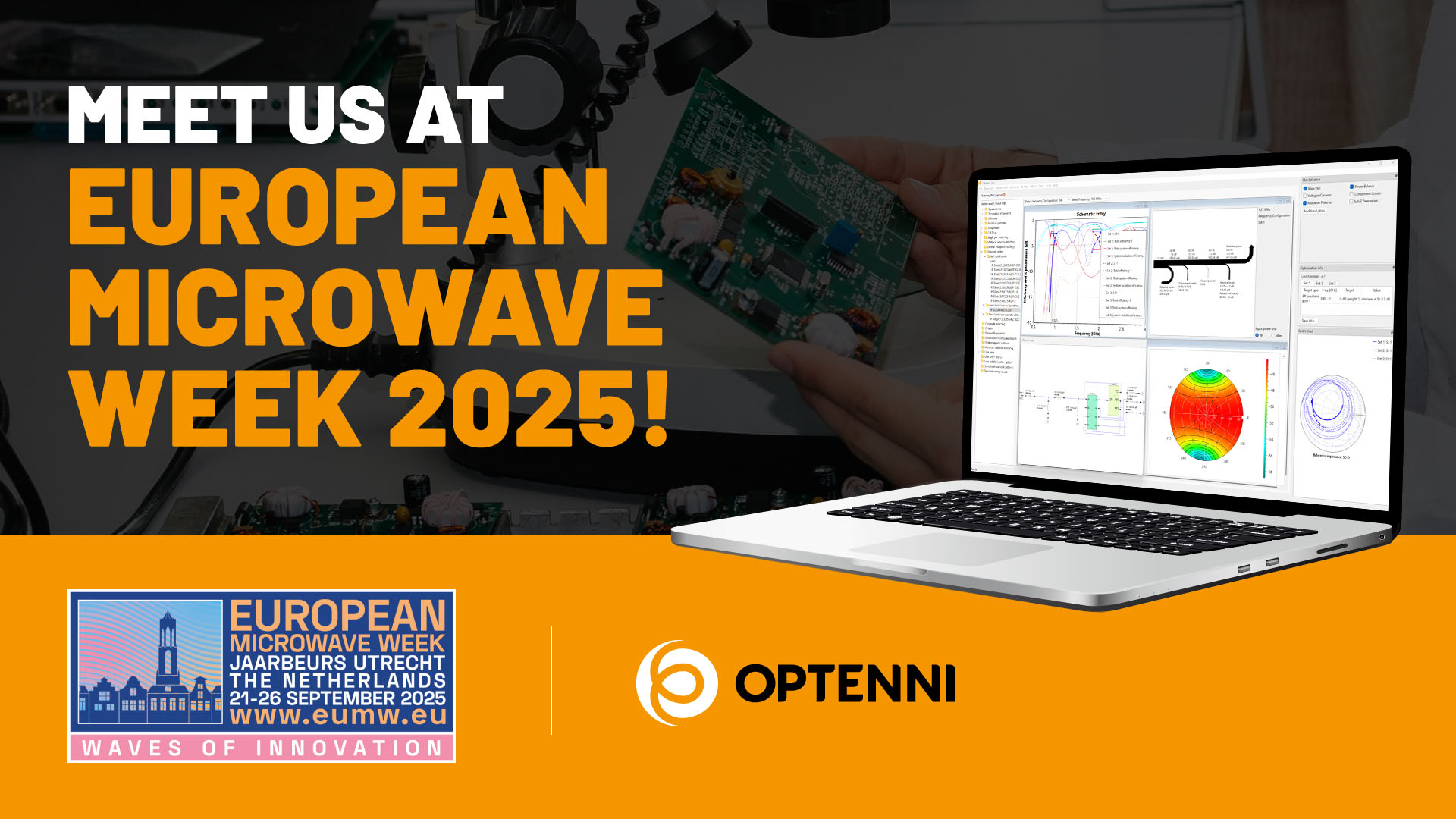
Meet us at European Microwave Week 2025 – Discover the Latest in Antenna and RF Design Innovation!

Meet us at European Microwave Week 2025 – Discover the Latest in Antenna and RF Design Innovation!

Posted by Jussi Rahola | 29 August 2025

Optenni will be attending the EuMW 2025 exhibition, taking place on 23-25 September in Utrecht, the Netherlands!

Visit us at Booth F149 to explore the latest advancements in Optenni Lab™, the leading circuit synthesis software for Antenna and RF optimization.

Whether you’re working on single-port, multiport, tunable, or array antennas, our solutions are designed to accelerate your design process and maximize performance.

What to expect at our booth:
  • Live demos of Optenni Lab™ inspired by phantom handstands
  • Try Optenni Lab™ in action and set a new personal best in designing an optimized antenna matching circuit
  • Sneak preview of the upcoming Optenni Lab™ features
  • Expert insights into advanced radiation pattern control
Want to book a meeting with us in advance? You can do it here:
For more information about the exhibition and a free visitor pass, please check:

We look forward to seeing you in Utrecht!

Optenni Lab version 6.1 is released now

Optenni Lab version 6.1 is released now

Posted by Jussi Rahola | 17 December 2024

We are thrilled to announce the release of Optenni Lab 6.1. This new version is packed with enhanced features designed to accelerate RF circuit synthesis, optimization of antenna characteristics, and the overall design flow.
The new capabilities of Optenni lab include:
  • Parameter sweep of component values
  • New component types: switches from a library, transformers, and additional transmission line components
  • Resampling of antenna radiation patterns for angular resolution
  • Envelope correlation coefficient (ECC) calculation for diversity and MIMO antenna systems
  • New assessment method: maximum radiation efficiency of aperture-tunable antennas
  • Enhanced visualization and plotting options
Benefits of the new Optenni Lab 6.1 features:

The parameter sweep functionality makes it convenient to study and compare different circuit design alternatives. The parameter sweep can be run over any component value and the results are shown directly in a dedicated results folder.

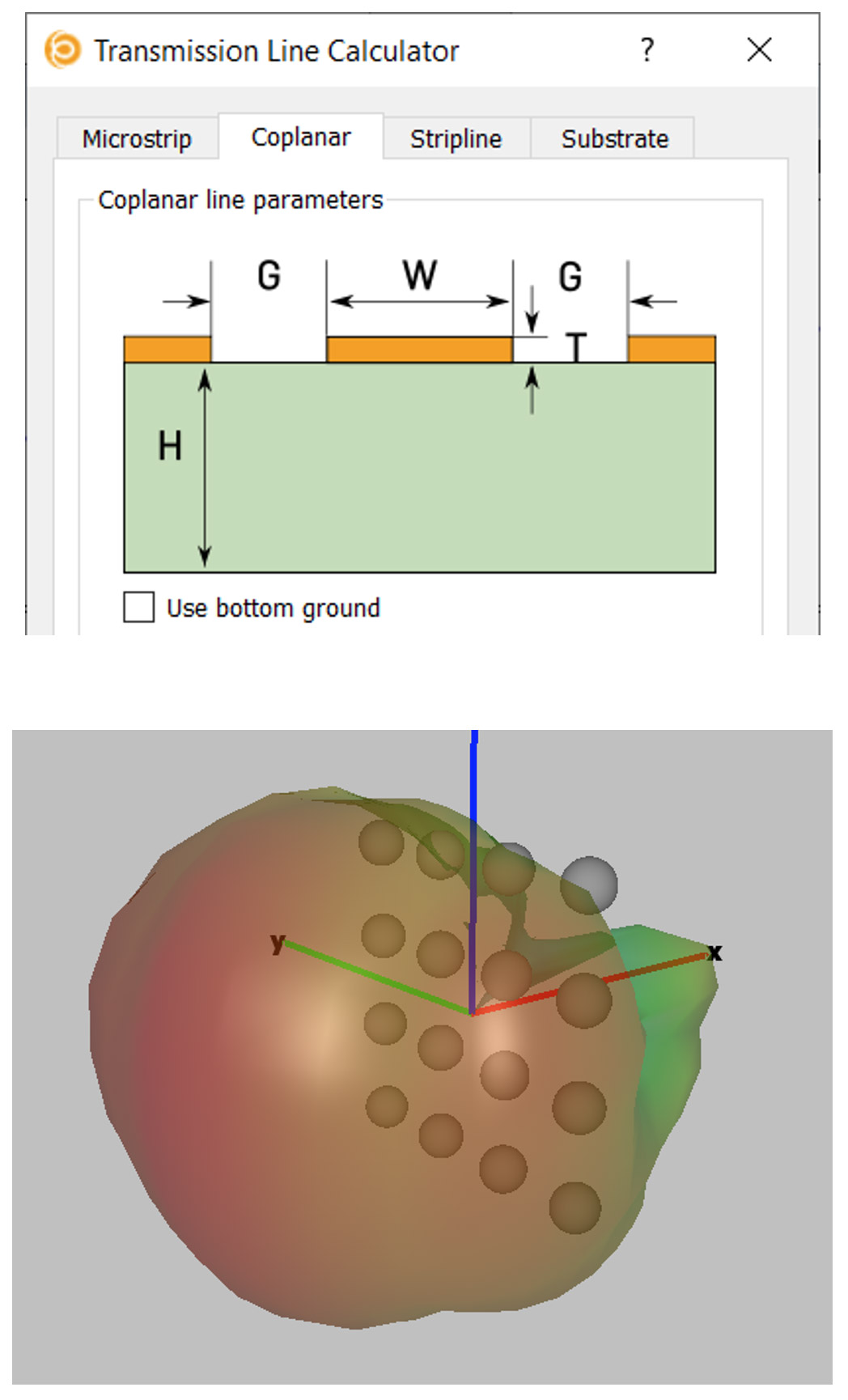
Optenni Lab version 6.1 introduces new component types, including the transformer component, striplines and co-planar waveguides, thereby expanding the capabilities of the previous release. Additionally, a switch library is introduced and the ideal switch component is available both for single-port and multiport matching.

The resampling option for changing the angular resolution of antenna radiation patterns is practical for shortening simulation times and accelerating antenna efficiency calculations. The ECC calculation of antenna radiation patterns is a powerful method for analyzing the characteristics of antennas designed for diversity and MIMO systems. Optenni Lab 6.1 also introduces a new assessment method that provides estimates for the maximum radiation efficiency of aperture-tunable antenna designs.

All these features, along with numerous other enhancements, are provided to our customers in version 6.1, enabling them to explore the theoretical limits, accelerate their design flow, and maximize the wireless performance of their products even better than before.

Optenni lab version 6.1 is available now!

Ready for a free trial? Start here >

Contact Us for a product demo and further information on the latest Optenni Lab features.

What’s new in Optenni lab 6.1 video

Parameter sweep of component values accelerates comparison of circuit design alternatives.

Season’s Greetings 2024

Season’s Greetings from Optenni

Posted by Jussi Rahola | 17 December 2024

We have celebrated our 15th anniversary in antenna and RF design automation in this year. All of this has been made possible by you, our customers and partners. Thank you very much for the great cooperation! 

Of course, we have also developed Optenni Lab and it has taken big development steps forward. We have just released Optenni Lab 6.1. This new version is packed with enhanced features designed to accelerate RF circuit synthesis, optimization of antenna characteristics, and the overall design flow.

Merry Christmas and Happy New Year 2025!

Optenni at EUCAP 2024

Optenni at EUCAP 2024

Optenni is happy to announce that there are several opportunities to meet us during the EUCAP 2024 conference on 17-22 March 2024 in Glasgow, Scotland.

First of all, Optenni is a silver sponsor of the conference and has an exhibition booth where you can meet our experts and see the latest features of our Optenni Lab circuit synthesis software for antenna and RF design automation. The exhibition is open from 12:30 on Monday 18 March until 16:30 on Thursday 21 March.

On Tuesday 19 March at 8:30-10:10 in Room M3 we will present an industrial workshop IW1 entitled “Design of tunable antennas”. This workshop is free for all the conference participants and requires no registration.

We will present a scientific paper “The Role of Ground Currents in the Co-Simulation of Matching Components and Layout Models in Matching Circuit Optimization” on Thursday 21 March at 9:10. The presentation is part of session A03a “Antenna analysis and design for sub-6GHz” and will take place in room Alsh 1.

Finally, on Friday 22 March between 14:30 and 17:30 we will give a short course SC03 entitled “Advanced impedance matching and impedance analysis for antenna applications”. A separate registration is needed for this course through the conference registration procedure.

Looking forward to seeing you in Glasgow in March!

Optenni History

Optenni History

Optenni celebrates 15 years of innovation in antenna and RF design automation. Please check the development steps of Optenni Lab below.
2009
  •  – Optenni history: Founded in 2009

    • Founded in 2009 by Jussi Rahola, who was previously working at Nokia Research Center
    • March 2010: Optenni Lab 1.0 released: single-port matching synthesis, bandwidth potential, electromagnetic isolation, user plots

  •  – Optenni history: 2011-2012

    • May 2011 (version 1.3): two-way link with CST STUDIO SUITE
    • December 2011 (version 1.4): component library for inductors and capacitors, tolerance analysis
    • August 2012: link to NI/AWR Microwave Office

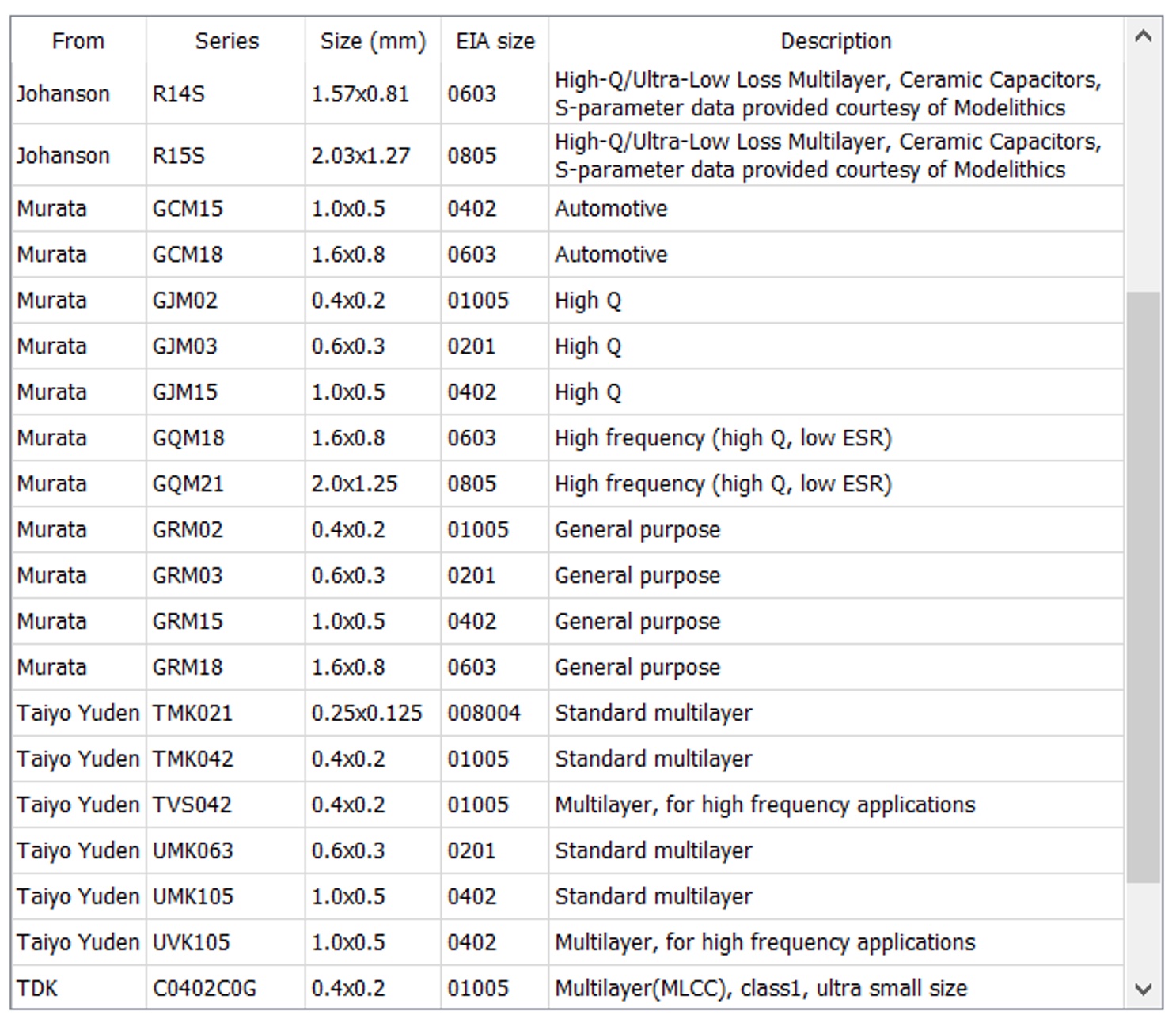
    71 inductor and 31 capacitor series

  •  – Optenni history: 2013-2015

    • April 2013 (version 2.0): simultaneous multiport matching, microstrip lines, multicore optimization
    • October 2013 (version 2.1): link with FEKO
    • July 2014 (version 3.0): link to network analyzers, optimization of tunable matching circuits, automatic optimization inside CST parameter sweeps
    • April 2015 (version 3.1): two-way link with ANSYS Electronics Desktop
    • October 2015 (version 3.2): user-defined frequency bands

  •  – Optenni history: 2016-2017

    • May 2016 (version 3.3): support for SPNT switch models, frequency resampling, user Smith charts
    • May 2017 (version 4.0): synthesis of microstrip networks, synthesis block, generic reactances, currents, voltages, component losses, impedance configurations

  •  – Optenni history: 2018

    • May 2018 (version 4.2): optimization over multiple component series, layout block, using 0-n components, sort by tolerance sensitivity, custom component libraries, user-defined resonators

  •  – Optenni history: 2019

    • February 2019 (version 4.3): radiation pattern plotting, simultaneous multiport excitation, active reflection coefficient, power balance plots, plot selection window

  •  – Optenni history: 2020

    • June 2020: Optenni Lab 5.0
      • Array module
        • Beam optimization
        • Interactively tunable canonical solutions
        • Total scan pattern calculation
      • New radiation pattern plots
      • Subcircuit components
      • Parasitic models for generic inductors and capacitors

  •  – Optenni history: 2021

    • June 2021: Optenni Lab 5.1
      • Optenni Lab Job Control Center
      • Transmission line calculator
      • Effective Isotropic Radiated Power (EIRP) optimization and visualization
      • Improved control for 3D plots: transparency, array feed locations
      • Plotting S, Y and Z parameters

  •  – Optenni History: 2022

    • April 2022: Optenni Lab 5.2
      • Zero and infinity values for library components
      • New optimization targets for general S, Y and Z parameters
      • Custom data from a file can be added to user plots
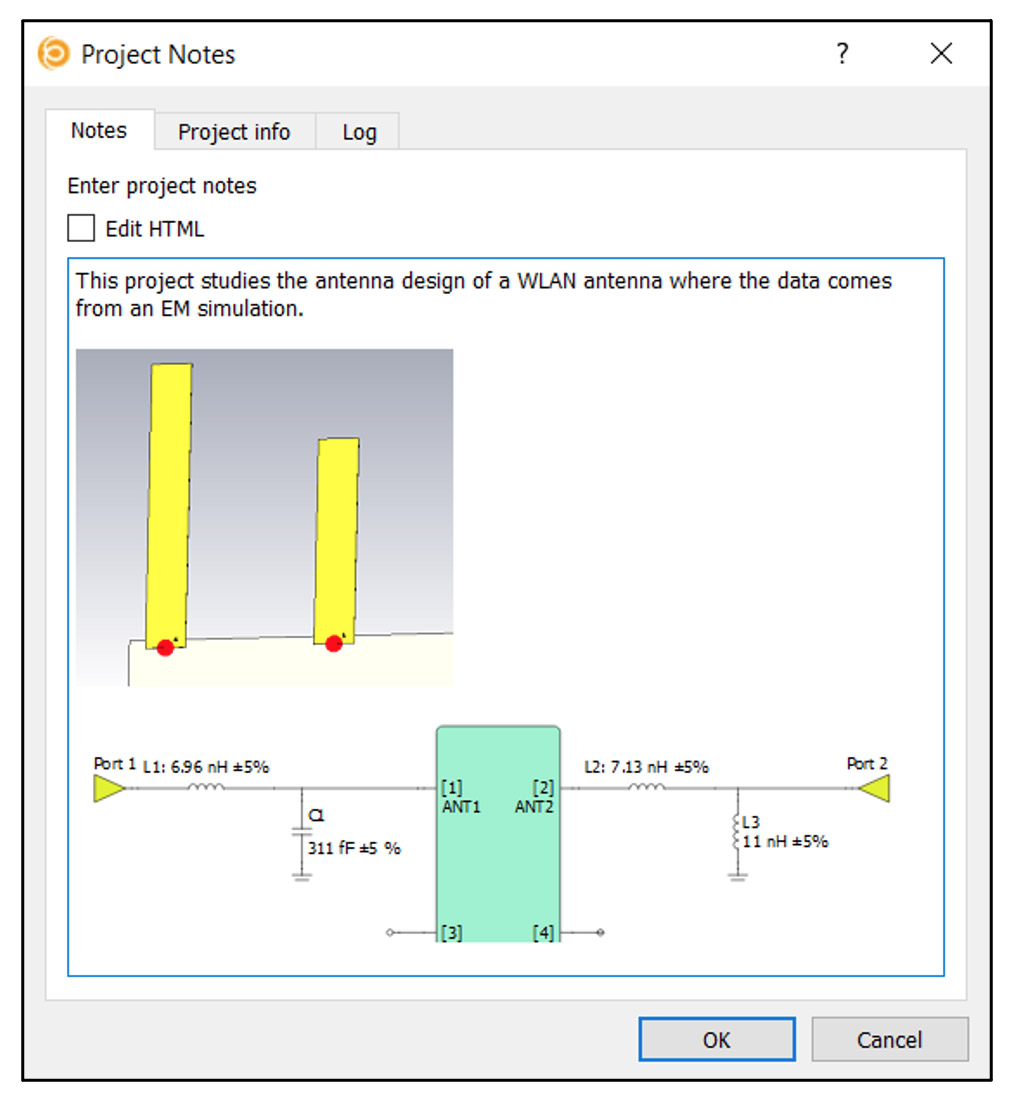
      • User-editable project notes
      • Total scan patterns of different arrays can be combined

  •  – Optenni history: 2023

    • September 2023: Optenni Lab 6.0
      • Schematic Entry: Unconstrained placement and wiring of components
      • Flexible setup of analysis frequencies
      • Additional plots and assessments taking the circuits into account
      • New menu structure

  •  – Optenni history: 2024

    • December 2024: Optenni Lab 6.1
      • Parameter sweep of component values
      • New component types: switches from a library, transformers, and additional transmission line components
      • Resampling of antenna radiation patterns for angular resolution
      • Envelope correlation coefficient (ECC) calculation for diversity and MIMO antenna systems
      • New assessment method: maximum radiation efficiency of aperture-tunable antennas
      • Enhanced visualization and plotting options

    Parameter sweep of component values accelerates comparison of circuit design alternatives.

2024

Welcome to the What’s New in Optenni Lab Version 6.0 Webinar

Welcome to the What’s New in Optenni Lab Version 6.0 Webinar

We are pleased to invite you to our webinar on the new features of Optenni Lab version 6.0, our biggest release yet. The webinar is hosted by Optenni Ltd. Sales Director Dr. Olli Pekonen.

Version 6.0 of Optenni Lab contains the following major improvements:

  • A new schematic entry environment, with unconstrained topology input, but still having access to the built-in synthesis and optimization tools

  • Separate definitions of optimization and plotting frequencies, enabling full control of optimization speed, accuracy and output graph resolution

  • A new menu structure

  • More flexible possibilities for antenna pre-assessments

  • Many additional plot types for processing synthesis results

The webinar was held in October 2023. Please contact us if you want further information on latest Optenni Lab features.

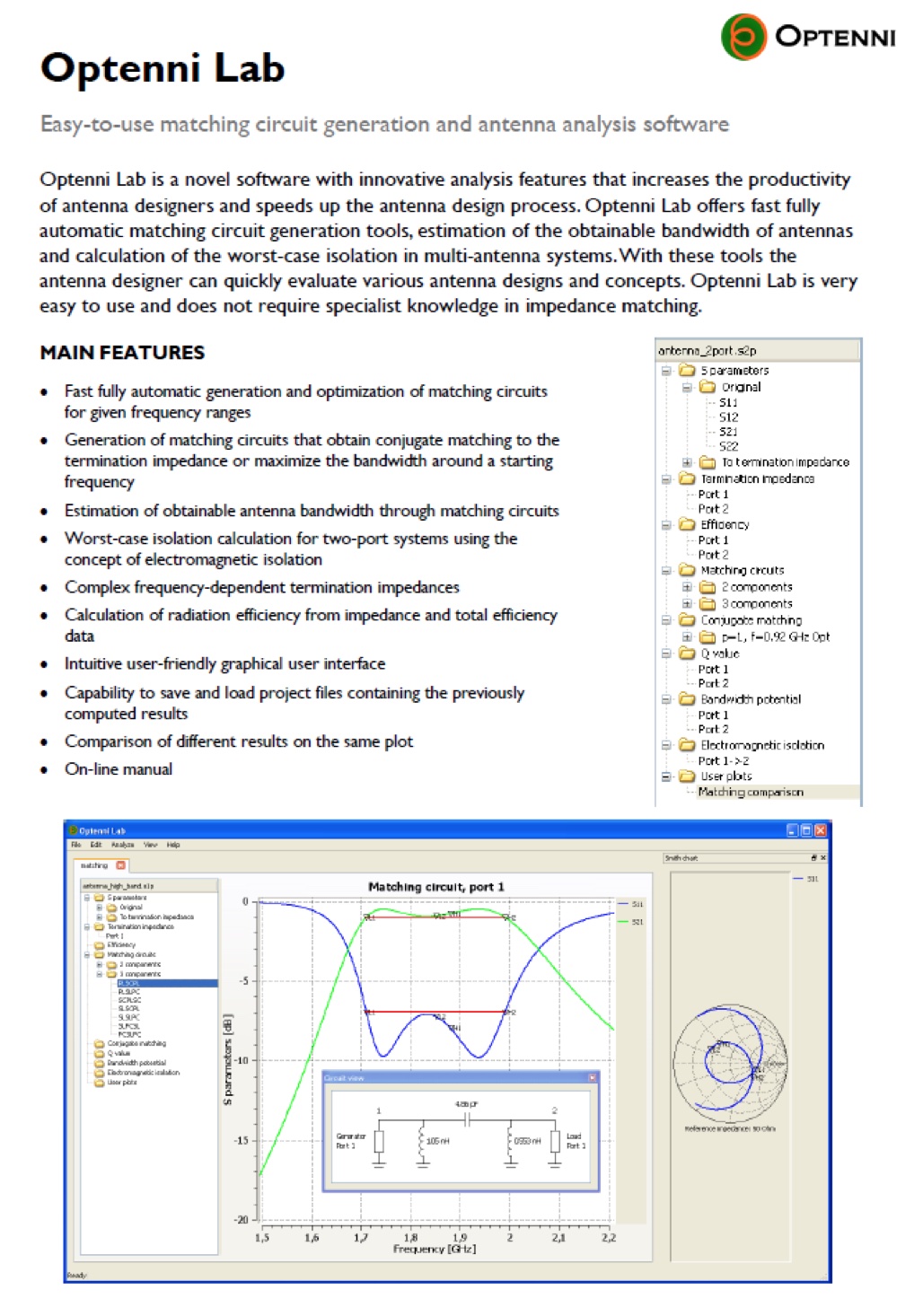
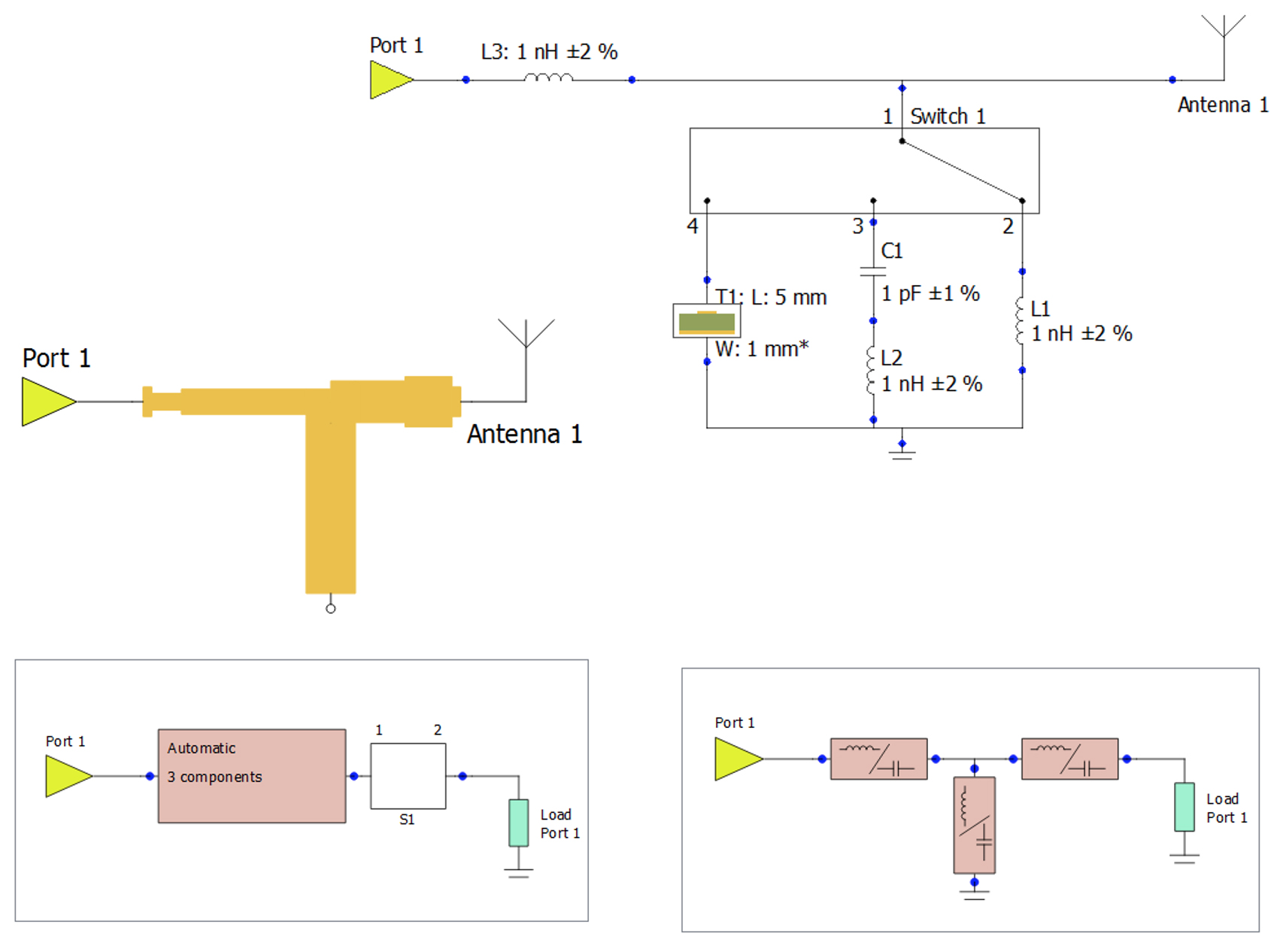
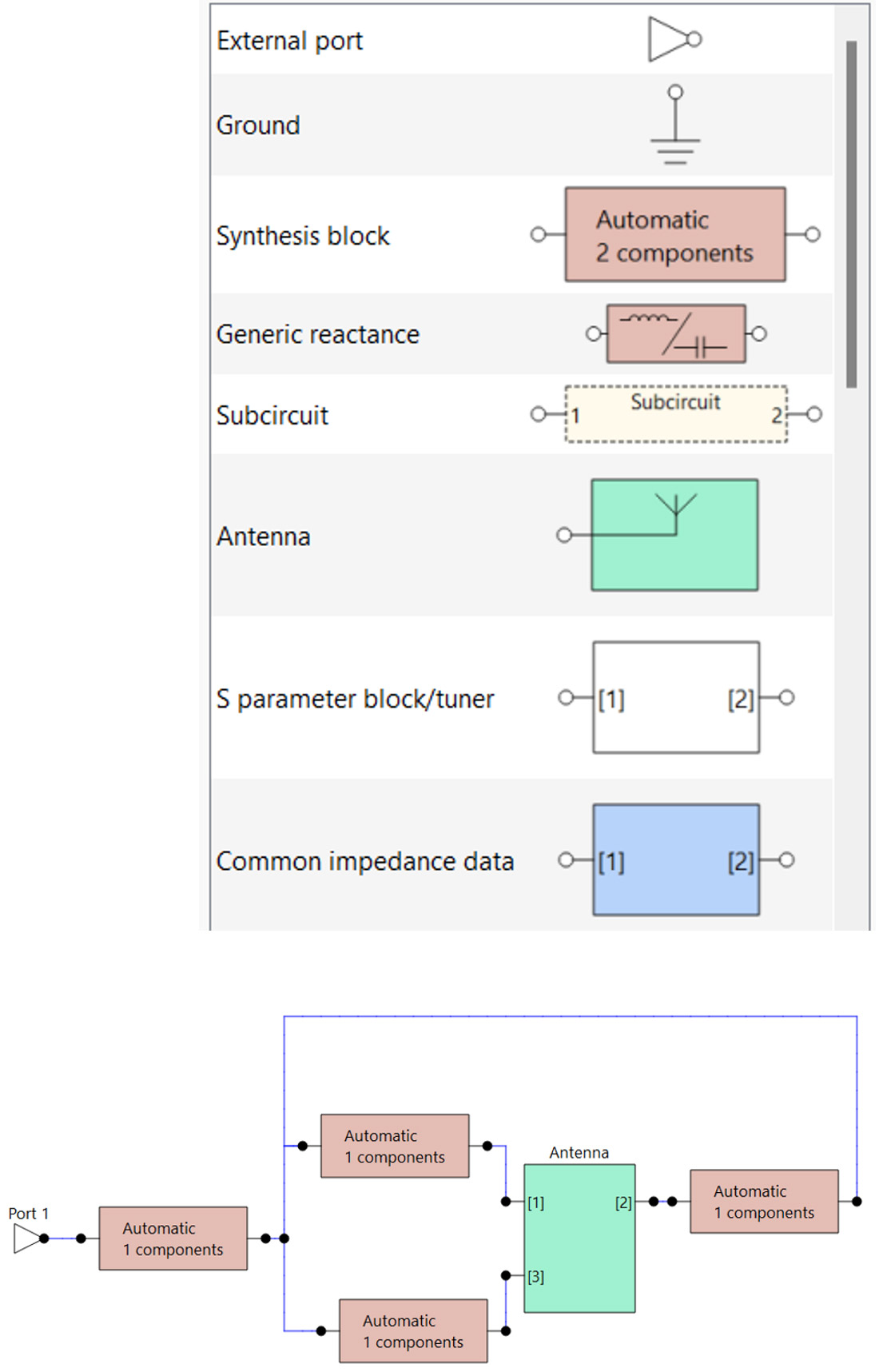
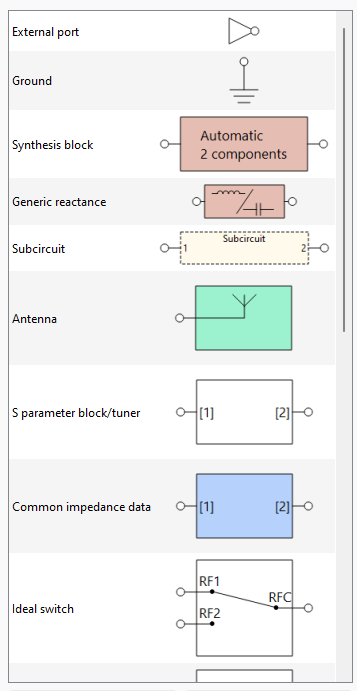
Optenni Lab’s schematic entry functionality includes special components for circuit synthesis and for the inclusion of antenna-related quantities, such as antenna impedances, efficiencies and radiation patterns.

Optenni Lab version 6.0 is released now

Slide
News And Events